
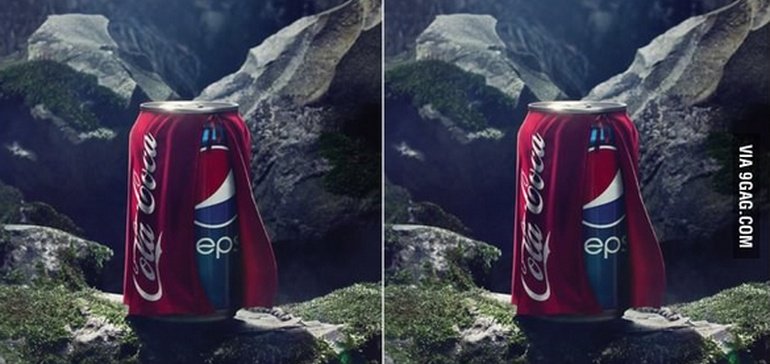
The debate over Coke vs. Pepsi is a common argument had amongst consumers both in the United States, and the rest of the world. A controversial ad appearing in 2001 though, led to the question of whether the rivalry had been taken too far.
The Vending Machine Ad
In 2001, Pepsi released a short 30 second ad coming right for the throat of their longtime competitor. The contents of the ad consist of a lone boy in what looks like summer, using a vending machine to purchase two Coke cans to stand on and finally purchase a Pepsi can.
This ad uses some now dated lighting, camera angles, and editing, and is entirely without dialogue. Gentle guitar music plays in the background, while the only sounds of a vending machine and crack of a Pepsi can stand out. A very neutral color-scheme allows for the green shirt of the boy and red and blue from the cola cans to really catch the eye of the viewer.
With an ad so blatant about their message to the consumer about the correct choice in the cola wars, the question arises over who approved of the ad and why. A correct understanding of media literacy may hold the answer as to what to make of this.
W. James Potter, author of Media Literacy defines media literacy as,
“a set of perspectives that we actively use to expose ourselves to the mass media to process and interpret the meaning of the messages we encounter.”
This definition provides the type of lens needed to look at this ad analytically.
The ad was created by a Pepsi advertisement team and has constructed a narrative that children very adamantly prefer Pepsi over Coke. The type of language used in the ad is reflective of this because even without physical dialogue, the boy’s actions show how far he is going to go to get a Pepsi.
Many techniques are used to attract the attention of the audience. The ad employs audio techniques specifically with the type of music used and the only loud sounds coming from the vending machine dropping the cans and the final crisp sound of a can opening. The eye catching colors of the cans also emphasize the theme of Pepsi over Coke.
This ad would definitely be described as devise because of the very explicit bashing of Coke by Pepsi. People may have been angry over the use of a child and Coke fans especially may have found the ad unethical because of the lack of subtlety. Where ads have been known to criticize the competition, it is the lack of decency by Pepsi which may upset people. Someone who enjoys Pepsi though may find the ad amusing and agree with the sentiment that Pepsi is the preferred soft drink.
The value that this ad is trying to convey is that Pepsi is ultimately superior to Coke and that children would agree with this point. The decision to use a small boy over paying at a vending machine to make this decision sends the ultimate message to consumers that they too should always pick Pepsi if not for themselves, than at least for their children. Like any advertisement, ultimately the ad’s purpose is to sell more product. Pepsi has long been trying to cement itself as the winner of the cola wars, but struggles to overtake the brand loyalty that their main competitor has.
Audience Reception to the Cola Wars
The reaction to both companies’ marketing to win the cola wars has been discussed both formally and informally. In a blog post by Lucy Gevorgyan, she discussed her thoughts on what she felt made the ultimate difference between the two colas.
“To put it simply, the means of building a loyal and long-lasting relationship, Coca Cola focuses on connecting with the customers on a more intimate and personal level; promote emotional attachment; personalize products in order to be closer to the consumers; and use motivational call to action tactics.
And then, there’s Pepsi, which, in my very humble opinion, has better taste than Coca Cola, however, when it comes to emotional marketing, the brand stands no chance next to its main competitor. While Coca Cola restrains itself to include celebrities or any kind of socially popular individual in its advertising videos, Pepsi is all about displaying influencers.”
Lucy Gevorgyan
I would agree with Lucy that indeed Pepsi is the better cola, and that Coke is able to resonate more with consumers because their feeling of belonging to the Coke family that unites people. While people associate Christmas, polar bears, and loyalty with Coke, Pepsi forces itself into relevancy with a promotional deal with the hottest current rapper or Kardashian.
Other contemporary blogs have weighed in on the subject as well. A blog post from Neworld.com by Katelynn Spaid discusses the five key takeaways from the documentary Pepsi vs. Cola: The Marketing Battle of the Century.
They are:
- Innovation is the foundation of the cola wars
- Delivering an attainable product trumps reputation
- Sell the user, not the product
- Consumers do not buy taste and consumers do not by blind
- Every brand needs an enemy
I would agree with Spaid that the rivalry between the two colas is a perfect American rivalry and a great marketing study. I think the rivalry between these two is something that will always be expanding and as a consumer, something fun to watch.
 Connor McKay's Life and Interests Blog