
As technology improves and advances, the limits to what they can do seemingly become more and more endless. For as many benefits technology brings, there also becomes more risk in the areas of privacy and false information. One such example is deep fakes. Author J.M. Porup from CSO online defined deep fakes as, “Deepfakes are fake videos or audio recordings that look and sound just like the real thing.”
The purpose of this blog is to explain the dangers of deep fakes and the lasting impact they can have on society. Deep fakes are an example of modern technology used to harm, they are an offset of fake news and should be removed across media whenever they are discovered.
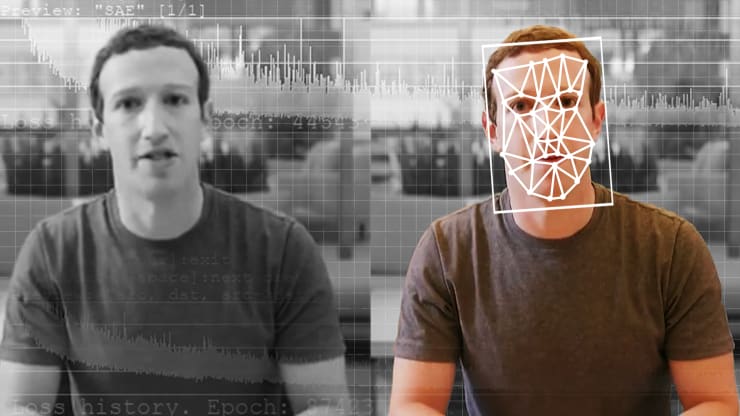
When understanding what deep fakes are, it is important to note how deep fakes have become more readily available. Porup’s article explains that software needed to produce deep fakes has become available to the populace. This technology could only be used by Hollywood or intelligence agencies with the purpose of creating propaganda, but now allow anyone to create false information.
In her article explaining how deep fakes are created, Sally Adee from Spectrum Iee says,
“The main ingredient in deepfakes is machine learning, which has made it possible to produce deepfakes much faster at a lower cost. To make a deepfake video of someone, a creator would first train a neural network on many hours of real video footage of the person to give it a realistic “understanding” of what he or she looks like from many angles and under different lighting. Then they’d combine the trained network with computer-graphics techniques to superimpose a copy of the person onto a different actor.”
Adee’s explanation of how deep fakes are created reinforces my idea that deep fakes are an example of uncontrolled technology. The ability for AI’s to now be able to recognize and understand human faces pose massive risks for both national and personal security.
While many risks are presented with the advent, none have become more prevalent that deep fake pornography. Deep fake pornography is when someone uses the AI recognizing software to take an actress’s face and blend them with a pornographic image of video to create the illusion that the actress in question has false pornographic images of them. This is a very disgusting and disrespectful practice, as it robs women of consent and can blur their reputation as people will question as to whether or not these deep fakes are real.
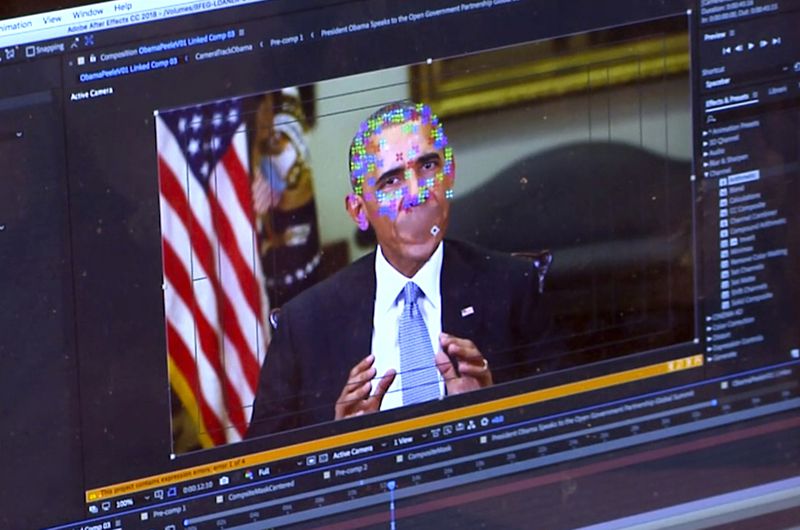
The threat to women appears to be the most immediate and vindictive of the risks. Ian Sample of The Guardian says,
“Many are pornographic. The AI firm Deeptrace found 15,000 deepfake videos online in September 2019, a near doubling over nine months. A staggering 96% were pornographic and 99% of those mapped faces from female celebrities on to porn stars. As new techniques allow unskilled people to make deepfakes with a handful of photos, fake videos are likely to spread beyond the celebrity world to fuel revenge porn. As Danielle Citron, a professor of law at Boston University, puts it: “Deepfake technology is being weaponised against women.” Beyond the porn there’s plenty of spoof, satire and mischief.”
This quote by Sample proves there to be a statistical danger to women. Deep fakes creates an entirely new thing to fear for women because unlike revenge porn, the culprit may be someone they have never met. While the primary victims are celebrities now, as technology improves it may become easier for hackers to use everyday women’s Facebook and Instagram pages to create deep fakes. It gets even riskier when one considers how many children are on these sites and where it can go from there.
Risks for deep fakes can go beyond this though, the fear of having government officials becoming victims to deep fakes is not out of the question. Adee’s article references this exact point when she says,
“For governments, the bigger fear is that deepfakes pose a danger to democracy. If you can make a female celebrity appear in a porn video, you can do the same to a politician running for reelection. In 2018, a video surfaced of João Doria, the governor of São Paulo, Brazil, who is married, participating in an orgy.”
Adee’s example shows that deep threats pose a threat to people beyond the movie stars. They pose a risk of causing government chaos and causing people to lose faith in their elected leaders. Without moderation from the sites that run these videos, the effects can catastrophic.
Chapter 14 of Potter’s text discusses a term that can relate to these risks. Defined on page 311, the idea of manifested effects can relate to the discussion of deep fakes because of how deep fakes may change privacy settings on social media.
Manifested effects are, “media effects that we can easily observe”. This can be applied to the idea of deep fakes because sites like Instagram are already becoming stricter on their age limits, while Facebook has declared war on “fake news” after the 2016 election.
Sample also included in his article that, “Last month, the first Deepfake Detection Challenge kicked off, backed by Microsoft, Facebook and Amazon. It will include research teams around the globe competing for supremacy in the deepfake detection game.”
This quote shows a clear decision by technology companies to aggressively combat the deep fake technology in an effort to both protect the victims and their users as to not fall victim to false information. The battle for free speech and censorship becomes blurred as technologies make it harder and harder to distinguish what is real and what is not.
With the advent of this new technology, it can cause a bit of anxiety or fear that one may become victim to this threat or be unable to spot the difference. Potter reminds us though how media literacy is key to staying above the curve with these risks. He says on page 331,
“The purpose of developing a personal media literacy is to gain control over the process of influence that the media currently dominate.”
Potter’s quote carries such relevance because a vigilant mind really does prepare one to handle any of the upcoming risks that can appear with the constant evolution of fake news.
Fake news or imagery has been around long before the internet. What the internet does have though, is advanced AI and software that can make is harder to differentiate the real from the fake. This is all the more reason one should focus on developing their media literacy.
For the case of deep fakes though, they go beyond fake news. Deep fakes rob a victim of both consent and privacy and can put the victim’s reputation at risk. Deep fakes illustrate how our changing society has become increasingly impersonal despite an improved communications system. Easily available AI and software can allow certain disenfranchised individuals to attack women and encroach on their digital bodies.
The solution though will always be media literacy and a commitment to activism from companies. Deep fakes are a new kind of danger that has presented itself to the internet and should be removed whenever they are discovered.

