
Broadway musicals and the music behind them have captivated audiences for decades. As someone who primarily listens to electronic dance music, I never have been to interested in this kind of music. Through my personal research and dating someone who is very touched by this music, I have come to learn that Broadway musicals leave a lasting impact on people’s lives through the artistry, performance, and music itself. I hope to show with this blog why the music of Broadway touches so many and has such an enthusiastic media culture.
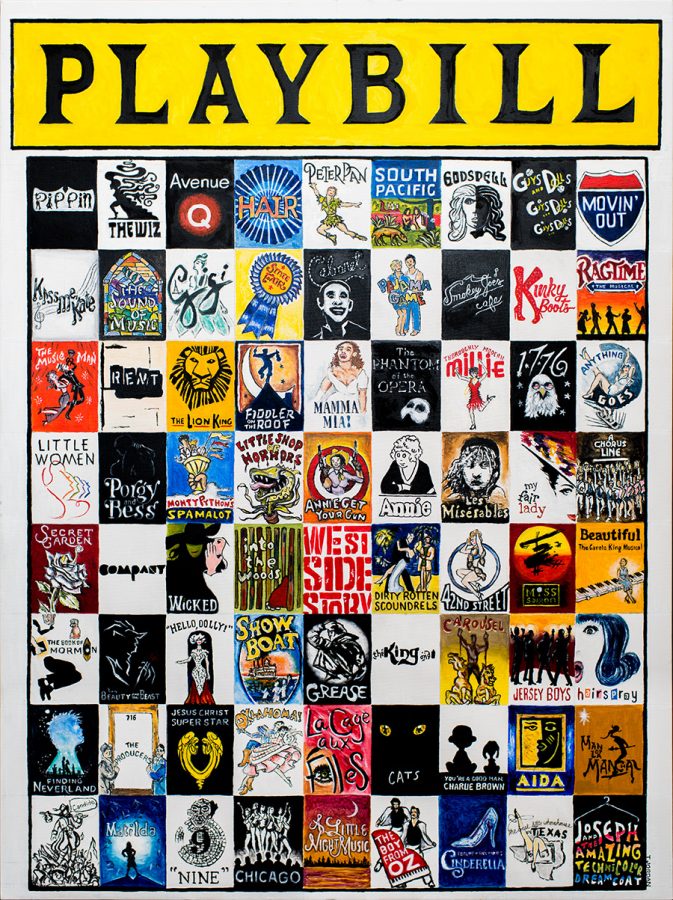
To understand the media culture of Broadway, it is imperative to know what a media culture is. Lecture 12.1 from our notes says that media cultures are, “not a bounded or spatially bordered culture but any way in which everyday practices of sensemaking hang together”.
This means that media cultures are able to create the reality of their world through their media. The media gives its group a sense of identity and belonging by being a reflection of their values.
The media culture of the Broadway audience is a diverse one. In an article by The Broadway League, it provides statistical data for the 21st century as to what group goes to sees the shows the most.
An important quote from the article regarding the data reads,
“During the 2017–2018 season, the average age of Broadway theatregoers was 40.6, the lowest since 2000, and for the second year in a row, there was a record total number of kids and teens under 18 attending a Broadway show. At 2.1 million, this is the highest total ever (it was 1.65 million the season prior). Additionally, since the 2010-2011 season, Hispanic/Latino attendance has grown by 61% or 430,000 admissions (from 710,000 to 1.14 million).”
This data indicates that the love for Broadway shows goes beyond the age and racial barrier. The enthusiasm for this kind of media is growing and creating a more diverse media culture.
An article from the New York Times by Michael Paulson also includes some data on the Broadway attendance audience writing,
“The audience remains disproportionately female (66 percent), white (75 percent), quite affluent (average annual household income: $222,120), and highly educated (among those 25 and older, 81 percent had a college degree and 41 percent had a graduate degree). But the League highlighted one hopeful bit of data on this front: Over the last seven years, attendance by Hispanics has grown by 61 percent, to 8.2 percent of the overall audience. The audience is 8.5 percent Asian and 2.9 percent black.”
This except from the article does show that there is some financial and racial barriers that make attendance to these shows more difficult, but still an increasingly diverse audience.
In an article by Terry Teachout from Commentary magazine, she gives her thoughts as to why musicals are so successful saying, “In short, it is, like the mystery novel and the three-camera TV situation comedy, an efficient and reliable way of amusing large numbers of ordinary people—but one that, in the hands of inspired craftsmen, can also be used to create enduringly beautiful popular art.”
I would agree with Teachout that musicals are able to captivate such a diverse and mainstream audience because of their versatility. Musicals are able to discuss a plethora of themes and issues while simultaneously working with any genre and all strung together with memorable music. It is in this versatility that allows someone from any background or age-group to find a musical that resonates with them.
The music behind these shows is also a selling point onto itself, even those who have never been to Broadway or seen a show are able to lose themselves in the music and culture. In a PBS article discussing the elements of musicals, author Laurence Maslon writes,
“And, finally, there is the dissemination of the musical, which encompasses a vast narrative of communications and the media. Through sheet music, over the radio, in movies, on television, on gramophones, hi-fis, and CDs, through word-of-mouth, through visiting tourists, servicemen, grandmothers and their grandchildren, the world of the Broadway musical has been brought to every corner of this country and, by extension, the world.”
I would most certainly agree with Maslon’s point that Broadway musicals have been able to blossom with the continuing development of communication and media. Technology today allows for audiences to listen and see music from anywhere in the world in a matter of seconds. People now can experience the magic of Broadway without ever stepping foot in a theater. At the same time though, the iconic nature of some shows will remain forever timeless and assure new members to this culture through parents and grandparents passing their love of the theater to their children.

The introduction to musicals to me personally was through my relationship with my girlfriend, who I met on campus this year. She has been doing musicals throughout her high school years and has enjoyed going to Broadway over the years.
When asked why she loves musicals and the experience of Broadway, she said,”It is so amazing to see people from all walks of life coming together to achieve a common goal. My cast mates and I become family during theatre seasons and it is so moving when I go to see Broadway shows and I know that the cast I’m watching has gone through the same bonding experience I have.”
I feel that her quote emphasizes my idea that Broadway musicals a culmination of art, performance, and music. It is in this combination that people from all groups are able to find something that inspires them. It is truly a powerful media group.

