
A television show that I have recently become enthralled in is Seinfeld. Though a bit dated, this self-proclaimed “show about nothing” has dominated my Hulu watching schedule as I continue to binge through it.
Despite never seeing the show until a few weeks ago, my girlfriend suggested we start watching it together and work our way through from the very beginning till the end. I have been amazed at the show’s sarcastic depiction of life in the 90s and the level of comedy and selfishness that the main character’s exhibit. I feel the show still has much to offer today and produces a poignant look into how media tries to portray life.
Chapter eight in the textbook discusses ideas relating to the relationship between media content and reality. Lecture 06.1 presents some key themes that can be applied to Seinfeld.
The first concept to be analyzed is social utility. Social utility refers to a media’s ability to, “portray lessons that can be used in everyday life” This concept perfectly applies to Seinfeld because the show expertly mocks this concept by having the character’s often do the opposite of the correct moral choice whether this when George lies about being a marine biologist to impress a woman or Jerry dumps a woman because his arch rival Newman previously dumped her. The show is so funny because of how immoral the characters behave.
Another concept discussed in the lecture is the idea of identity and emotional involvement. This concept scrutinizes the media’s ability to depict how characters behave in situations and questions how real the reactions are. In this respect, I think Seinfeld is very successful. Jerry’s observational humor represents the things people often feel inside but do not act on because of societal norms. An example would be when Jerry refused to shake Poppie’s hand because he saw him not wash his hands. The cast of characters in this show feel like real people because of their relatability.
A journalist for the Smithsonian Magazine named Katie Nodjimbadem wrote an article in 2016 about the staying power of Seinfeld. In it, she interviews pop culture writer Jennifer Keishin Armstrong, who is writing a book on the show.
One quote from the article reads, “One of the extraordinary things about this show is the fact that all of America embraced a show about four terrible people. I really believe that this kind of ushered in what we now have on television, which is the age of the prestigious drama with anti-heroes.”
I would agree with Armstrong because the show would not work without the terrible behavior of the central characters. Their selfish nature and shallow demeanor are what gives the show its humor. Often times in the show, it is the selfishness of the characters that becomes their undoing so the show does make a point to mock these kinds of people.
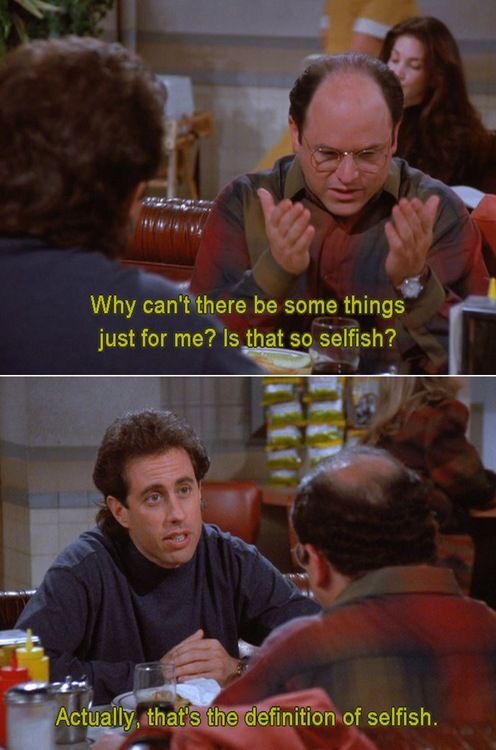
Not all people seem to share this sentiment though, in a Jewish news source called Forward.com, writer Joshua Furst argues that Seinfeld’s domination of pop culture was detrimental to how American Jews identify themselves.
Furst writes, “He and his friends were angry at inconvenience, not injustice. If they wanted anything out of life, it was to be told that their selfishness was justified. And we were meant to identify with them.”
I think Furst is missing the point entirely here. The audience is not really meant to identify with these characters, but rather laugh at how terrible they are. Characters like George and Elaine often have their successes spoiled because of their mistreatment of others.
The show ultimately is a show about nothing that is able to provide a cynical look into the 90s, it is filled with clever jokes, outlandish characters, and a lack of character development that makes it a hit still to this day and paved the way for other comedies like it, such as It’s Always Sunny In Philadelphia.

